If you live anywhere in Hernando County — Spring Hill, Brooksville, Aripeka, or the surrounding unincorporated areas — you have hard water. It is not a question of if, it is a question of how hard, and for most homes in this area, the answer is very.
Hard water is not a health hazard. You can drink it, cook with it, and bathe in it safely. But over time, the minerals in hard water wreck your plumbing from the inside out. Pipes narrow, water heaters fail early, fixtures corrode, and you spend more money on repairs and energy than you should.
Understanding what hard water actually does and how a water treatment system stops the damage is one of the most practical things a Hernando County homeowner can do to protect their investment.
What Makes Hernando County Water So Hard
The water supply in Hernando County, whether it comes from the municipal utility or a private well, originates in the Floridan Aquifer. As groundwater moves through the limestone formations that define Florida’s geology, it dissolves calcium carbonate and magnesium. By the time it reaches your tap, the mineral concentration is well above what the U.S. Geological Survey classifies as “hard” — and in many parts of the county, it qualifies as “very hard.”
Those minerals are harmless to your body but destructive to your plumbing system. They precipitate out of the water whenever it is heated or when it sits in contact with pipe surfaces, forming a chalky white or off-white scale called limescale.
How Hard Water Damages Your Plumbing System
Pipes lose diameter. Scale builds up on the interior walls of your pipes year after year. In copper and galvanized steel pipes, the buildup can reduce the interior opening by 50% or more over a decade. The result is low water pressure, which is one of the most common complaints from Hernando County homeowners. If you are experiencing pressure issues, our post on low water pressure solutions walks through the diagnosis process.
Water heaters fail early. This is the single most expensive consequence of hard water. Sediment settles at the bottom of the tank, insulating the water from the heating element and forcing the unit to work harder. That leads to the popping noises homeowners hear from their water heater, higher energy bills, and eventually premature tank failure. Homes with hard water that do not flush their water heater annually often lose three to five years of tank life. Our water heater maintenance guide covers what to do and how often.
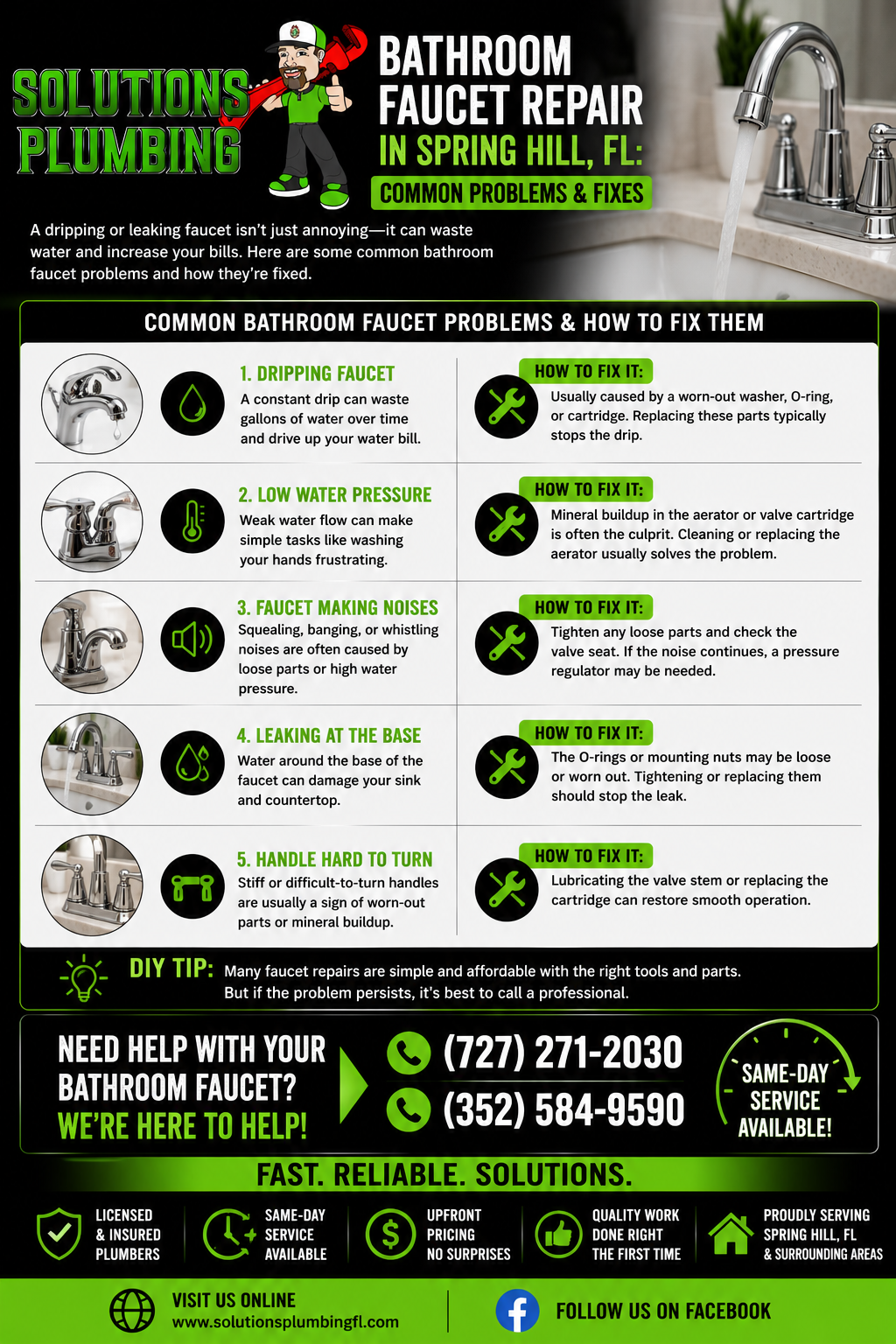
Fixtures corrode and clog. Showerheads, faucet aerators, and supply valves all collect mineral deposits. Flow becomes restricted, finishes deteriorate, and moving parts seize up. Replacing fixtures every few years gets expensive, and it is completely preventable.
Drains clog faster. Hard water minerals create a rough, sticky surface inside drain pipes that catches hair, soap, and grease more readily than a clean pipe would. This contributes to the chronic clogging issues that are so common in the area. If your bathroom sink keeps getting stopped up, hard water scale is likely a contributing factor.
Appliance efficiency drops. Dishwashers, washing machines, and ice makers all suffer from hard water. Scale builds up on heating elements and internal components, reducing efficiency and lifespan. The U.S. Department of Energy has noted that sediment accumulation in water-using appliances is a significant factor in reduced energy efficiency.
The Fix: Whole-Home Water Conditioning
The only way to stop hard water damage is to treat the water before it enters your plumbing system. A whole-home water conditioning system or water filtration system installed at the point of entry removes or neutralizes the calcium and magnesium before the water reaches any pipe, fixture, or appliance in your home.
Water softeners use ion exchange to replace calcium and magnesium ions with sodium or potassium ions. The treated water no longer forms scale, and over time, existing scale inside your pipes can actually begin to dissolve.
For homes on well water — common in Brooksville, Aripeka, and parts of unincorporated Hernando County — a filtration system can also address iron, sulfur, and sediment that a basic softener does not handle. If your hot water smells like rotten eggs, a targeted filtration solution can eliminate the sulfur bacteria that cause the odor.
What You Will Notice After Treatment
Homeowners who install water treatment systems typically notice the difference immediately. Soap lathers better, water spots disappear from shower doors and dishes, skin and hair feel softer, and the white buildup on fixtures stops appearing.
The long-term savings are even more significant. Pipes stay clear, water heaters last longer, fixtures do not need constant replacement, and energy bills drop because appliances run more efficiently.
Get Your Water Tested
Solutions Plumbing provides water quality assessment and installs water conditioning and filtration systems sized for your home and your water conditions. We serve Spring Hill, Brooksville, Hudson, Aripeka, and all of Hernando and west Pasco County.
We are family-owned, fully licensed and insured, and backed by over 60 years of experience. Call (727) 271-2030 or schedule an appointment to find out what is in your water and what it is costing you.